Menu
e-shop


Žampach L, Kosinová Paušová T. Ischemický infarkt mozečku u greyhounda – popis případu.
Veterinární klinika 2026;23:20-25.
SOUHRN
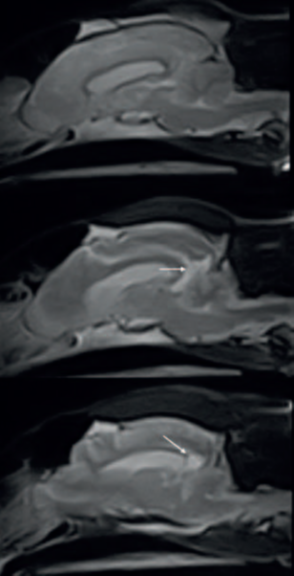
Článek popisuje případ greyhounda s opakovanými intrakraniálními neurologickými příznaky v podobě epileptického záchvatu, dezorientace, inkoordinace, u něhož byla po dvou MRI vyšetřeních stanovena diagnóza recidivující tromboembolie. Pacient byl podroben diagnostice za účelem zjištění možné příčiny tohoto stavu a nasazení terapie. Na základě zvýšeného poměru proteinu ku kreatininu v moči je vysoce pravděpodobné, že predispozice pacienta k tromboembolii má příčinnou souvislost s protein- losing nephropathy. Po nasazení adekvátní terapie (ACE inhibitory a antitrombotická terapie) je
pacient pět měsíců klinicky stabilní a nedošlo u něj k recidivě.
Klíčová slova: ischemie, infarkt, mozek, protein-losing nephropathy, UPC, tromboembolie, ledviny,
MRI, greyhound.
SUMMARY
The article describes a case of a greyhound with repeated intracranial neurological symptoms in the form of an epileptic seizure, disorientation, incoordination, in which the diagnosis of recurrent thromboembolism was established after two MRI examinations. The patient was diagnosed to determine the possible cause of this condition and to start therapy. Based on the increased ratio of protein to creatinine in the urine, it is highly likely that the patient's predisposition to thromboembolism has a causal relationship with protein-losing nephropathy. After the initiation of adequate therapy (ACE inhibitors and antithrombotic therapy), the patient is clinically stable for five months and has not recurred.
Keywords: ischemia, infarction, cerebrum, protein-losing nephropathy, UPC, thromboembolism, kidneys,
MRI, greyhound.*