Menu
e-shop


Bestrová N. I., Fichtel T. Trichobezoár z ľudských vlasov u psa – kazuistika. A trichobezoar composed of human hair in a dog - a case report. Veterinární klinika 2026;23(5):138-150.
SÚHRN
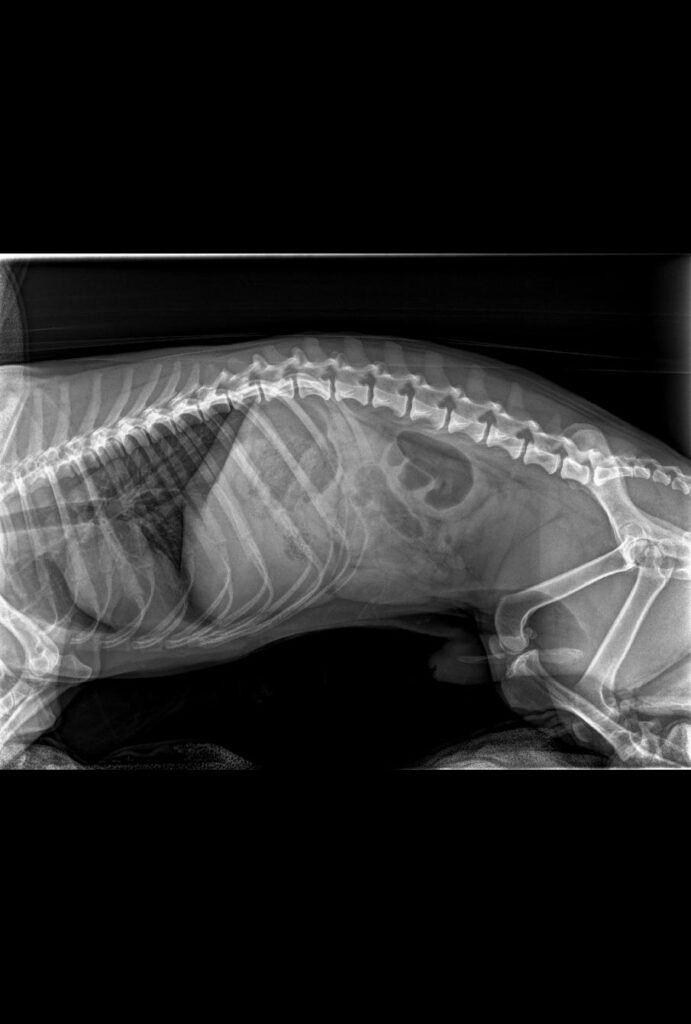
Pacientom bol 3,5 ročný nekastrovaný samec plemena český teriér s telesnou hmotnosťou 9,2 kg, prijatý pre akútny bolestivý abdomen, anorexiu, opakovanú regurgitáciu po príjme vody a jednorazovú hnačku. Klinickým vyšetrením bol zistený tuhý a výrazne bolestivý abdomen, hyperemické a suché sliznice s predĺženým kapilárnym návratom, čo oukazovalo na hypovolémiu a dehydratáciu. Hematologické vyšetrenie preukázalo výraznú leukocytózu s neutrofíliou, regeneratívnym posunom doľava a monocytózou, kompatibilnú so silnou zápalovou odpoveďou. Biochemické vyšetrenie potvrdilo prerenálnu azotémiu, hypokalémiu a mierne elektrolytové dysbalancie. RTG a ultrasonografické vyšetrenie poukázanli na prítomnosť lineárneho cudzieho telesa lokalizovaného v žalúdku, pokračujúceho cez pylorus do duodena až kraniálneho jejuna, s mechanickou obštrukciou tenkého čreva a plikáciou črevných kľučiek. Na základe týchto nálezov bola indikovaná urgentná chirurgická revízia dutiny brušnej. Bola vykonaná gastrotómia s odstránením cudzieho telesa zo žalúdka a následne enterotómia v oblasti duodenojejunálneho prechodu s odstránením druhej časti cudzieho telesa. Intraoperačne bol pankreas výrazne hyperemický a edematózny, suspektný z pankreatitídy. Pooperačne bol pacient intenzívne monitorovaný, bola zabezpečená infúzna terapia, korekcia hypotermie, hypotenzie, riešenie pokračujúcej regurgitácie, a postupná realimentácia diétou Royal Canin Gastrointestinal Low Fat. Počas hospitalizácie došlo k stabilizácii celkového stavu, návratu do normotermie, úprave hydratácie, normalizácii renálnych parametrov a obnoveniu gastrointestinálnej funkcie. Pacient začal prijímať potravu bez komplikácií, spontánne močil a defekoval formovaný trus. Vzhľadom na absenciu perforácie čreva, včasné chirurgické riešenie a priaznivý pooperačný priebeh bola prognóza hodnotená ako dobrá až veľmi dobrá.
SUMMARY
The patient was a 3.5-year-old intact male Czech Terrier weighing 9.2 kg, admitted for acute painful abdomen, anorexia, repeated regurgitation after water intake, and a single episode of diarrhoea. Clinical examination revealed a firm and markedly painful abdomen, hyperemic and dry mucous membranes, and prolonged capillary refill time, indicating hypovolemia and dehydration. Hematological examination showed marked leukocytosis with neutrophilia, a regenerative left shift, and monocytosis, consistent with a strong inflammatory response. Biochemical examination confirmed prerenal azotemia, hypokalemia, and mild electrolyte imbalances. Radiographic and ultrasonographic examinations indicated the presence of a linear foreign body located in the stomach, extending through the pylorus into the duodenum and cranial jejunum, causing mechanical obstruction of the small intestine with plication of the intestinal loops. Based on these findings, urgent surgical exploration of the abdominal cavity was indicated. A gastrotomy was performed with removal of the foreign body from the stomach, followed by an enterotomy at the duodenojejunal junction with removal of the second part of the foreign body. Intraoperatively, the pancreas was markedly hyperemic and edematous, raising suspicion of pancreatitis. Postoperatively, the patient was intensively monitored, fluid therapy was provided, and correction of hypothermia, hypotension, and persistent regurgitation was performed, followed by gradual refeeding with Royal Canin Gastrointestinal Low Fat diet. During hospitalization, the patient’s general condition stabilized, normothermia was restored, hydration improved, renal parameters normalized, and gastrointestinal function recovered. The patient began eating without complications, urinated spontaneously, and passed formed feces. Due to the absence of intestinal perforation, timely surgical intervention, and a favourable postoperative course, the prognosis was considered good to very good.